Home Blog Page 3

Nigeria Creative Industry and Climate Change Advocacy

0

The creative industry in Nigeria which covers Music, Fashion , Sports, Comedy, Nollywood, Food, Faith, Arts, Carnival etc is a significant sector with $4 trillion economy estimated that has the potential to drive economic growth, create jobs, enterprises and promote cultural exchange while driving the Climate Change economy through advocacy.
With the largest youth population in the world, high creativity level, Digital connectivity with about 165 m internet connectivity and dominating the social media space, Nigeria has a unique opportunity to leverage its creative industry to achieve sustainable development and climate change action like no other country.

Roles and Responsibilities of the Creative Industry generally are:

  1. Job Creation: The creative industry can create jobs for young people, reducing unemployment and promoting economic growth. This will reduce the hopelessness currently pervading the system and repurpose energy in the right direction.
  2. Cultural Exchange: The creative industry can promote cultural exchange, showcasing Nigeria’s rich cultural heritage to the world while creating revenue and enterprise for a struggling economy and the season is now within the last 5 years in the decade of action on the UNSDGs.
  3. Economic Diversification: The creative industry will greatly contribute to diversifying Nigeria’s economy, reducing dependence on oil and gas exposing opportunities for sectors to be developed in the course of advocacy.
  4. Innovation: The creative industry will drive innovation, promoting new ideas and technologies in the country and not many countries have can do this like Nigeria.
  5. ⁠Masses Reorientation There is need to drive a National reorientation based on perceive long and short term benefits in the course of of climate change advocacy and this strategies have been developed waiting for deployment . There no pretense that a mindset makeover is overdue for the people.

Benefits of the Creative Industry while advocating Climate Change.

  1. Economic Growth: The creative industry currently dominantly engages most people in the country and contribute significantly to Nigeria’s GDP however, under the cloak of the Climate Change advocacy, the country expand it scope and influence beyond borders and generate global revenue, enterprises and dominance.
  2. Cultural Preservation: The creative industry through story telling and content creation will help preserve Nigeria’s cultural heritage, showcase prowess and correct misunderstanding and misconceptions
  3. Youth Empowerment: The creative industry account for most foreign currency earning and empower young people, providing them with skills and opportunities that would not have been available and so adopted as already done by the UN will further propel Nigeria 🇳🇬 as a hub as it already evolved into.
  4. Global Recognition: The creative industry has brought identity and promotion, recognition globally showcasing its talent and creativity resilience, and the will to survive which is subtly rebranding the country.

Challenges Facing the Creative Industry

  1. Piracy and Intellectual Property Theft: The creative industry faces challenges related to piracy and intellectual property theft.
  2. Lack of Funding: The creative industry often lacks access to funding, limiting its growth and development.
  3. Infrastructure: The creative industry requires adequate infrastructure, including studios, equipment, and technology.
  4. Regulatory Framework: The creative industry requires a supportive regulatory framework, including policies and laws that promote its growth.

Opportunities for Growth and Development

  1. Investment Opportunities: There are opportunities for investment in the creative industry, including film, music, and fashion, food, sports, entertainment etc and using advocacy these can be unlocked and exported uninterrupted to cities aligned with the Global Covenant of Mayor GCoM for Climate and Energy a 13000 cities alliance.
  2. Monetization Opportunities: There are opportunities for monetizing creative content, including digital platforms and streaming services. Nigeria has to collaborate and partner to own these platforms because currently we do not have any means of repatriating revenue from our contents in music, movies, comedy, fashion etc.
  3. Platforms for Content Developers: There is a need for platforms that support content developers, providing them with opportunities to showcase their work in live performances and digital content in music films and other assets.
  4. Advocacy: Advocacy is necessary to promote the creative industry, highlighting its benefits and importance and at the same time creating climate mitigation and adaptation content for public benefits. A case study is Hollywood movie industry and how it was used to fool the whole world and created the perceptions we hold today about the west.

Climate Change Action and the Creative Industry

  1. Awareness and Education: The creative industry will play a significant role in raising awareness about climate change and promoting education and generally drive an end to end implementation of all the UNSDGs and their targets.
  2. Sustainable Practices: The creative industry can promote sustainable practices, reducing its environmental impact create jobs along those lines and enterprises in the economy.
  3. Innovative Solutions: The creative industry drives innovative solutions to climate change, promoting new ideas and technologies and exposing more opportunities that could have been ignored.
  4. ⁠Wealth Creation: global opportunity to take Nigeria 🇳🇬 creative industry across the world, making money, revenue for the country and brand recognition while advocat as a major UN partner in achieving sustainability.

Conclusively,
The creative industry in Nigeria has the potential to drive economic growth, create jobs, enterprises, diversify economy, export knowledge and digital products and promote cultural exchange. With the right support and investment, the creative industry can become a significant contributor to Nigeria’s economy and a leader in the global creative industry. We believe that with the right policies and strategies, Nigeria can harness the power of its creative industry to achieve sustainable development and climate change action.
Recommendations

  1. Develop a National Creative Industry Policy: Develop a policy that promotes the growth and development of the creative industry.
  2. Provide Funding and Investment Opportunities: Provide funding and investment opportunities for the creative industry.
  3. Promote Intellectual Property Protection: Promote intellectual property protection, reducing piracy and theft. Develop and deploy digital capabilities to seem lessly harness, protect and monetize content.
  4. Develop Infrastructure: Develop infrastructure that supports the creative industry, including studios, equipment, and technology for globalization of IP as well as monetization.
  5. Support Advocacy and Awareness: UN had adopted various elements of the Creative industry for the Support of advocacy and awareness efforts that promote sustainability , creative industry and its benefits as well as driving the creation of a carbon resilient economy.

Implementation Plan

  1. Short-term: Develop a national creative industry implementation plan for existing policy and provide funding and investment opportunities Deli
  2. Medium-term: Activate activities, events, to engage every aspect of the creative industry and Develop infrastructure and promote intellectual property protection.
  3. Long-term: Support advocacy and awareness efforts and promote sustainable practices in the creative industry deploying long term capabilities for sustainable development.

By implementing these recommendations, Nigeria can harness the power of its creative industry to achieve sustainable development and climate change action, promoting economic growth while exporting it’s creative industries all over the world and generate global revenue for the country.

Source: The Plenary

“Nigeria stands at the threshold to take over the whole initiative of climate change implementation”…Akpan

0

With an enviable massive population that guarantees potential market for new products and ideas, a society bustling with a vast amount of youthful demography, a world leader in oil/ gas production and an embarrassing digital connectivity network, Nigeria once again remains in the optics of investors as regards the economy of the future; The Carbon Eco era.

In a recent interview program, Renewed Hope Agenda:The Way Forward on Radio, captured by our correspondent Tekena Amakiri, a climate change expert Atai Albert Akpan, spoke on the subject of Climate Change, the UN SDG goals and how Nigeria can take advantage of the numerous opportunities it offers.

Q… What is Climate change all about ? And with United States of America’s withdrawal from the Paris agreement, does this move bode well for Nigeria or is it a negative?

Akpan… Climate change is the biggest subject matter currently, on the tables of many businesses globally, as the world tried to achieve the ambition of net zero by 2050. The knowledge of climate change touches on everything the world has passed through. It is basically all about mitigating the contamination of the atmosphere by reducing green house gasses. We should at this point note that the green house gasses is the basis of heating up the planet which results in a whole lot of problems, degradation of the environment, over heated landscapes and all that. So climate change is a method that is put in place to aid countries mitigate and reduce their dependence on burnt fuel. The whole concept of climate change is to help countries transform from high fossil fuel dependency to low carbon fuels, cleaner fuels and leveraging on the framework of advocacy, mitigation and
adaptation. Many who do support the implementation of climate change may not know everything about climate change because we don’t have the deep knowledge about the subject matter and how to go about it. Nigeria can live from the fact that we are in an era of climate change. We call it the Carbon Eco era. We are in a different era of the global economy. We have different economies. For now it is all about the Carbon Eco era. It is the most important subject matter today worth about 26 trillion dollars of economic potential.

Q…26 trillion dollars economy? How can Nigeria become part of this?

Akpan… Ironically, Nigeria is already doing a lot. Like the whole story of deploying solar panels, trying to do green fuel, the Nigerian gas flaring project and moving towards gas as a transitional fuel. What does it mean? Nigeria has to develop all the industries associated with gas flaring, which means you have to look at developing Methanol. You have to look at LNG, CNG and many other potentials associated with gas energy. That is already within the grid of the current government. Nigeria is one of the large oil/gas energy producers. Our move towards the use of solar panels is considered an adaptation of creating new energy sources and not depending on fossil fuel. The first part of it is what we call advocacy. It is basically to educate Nigerians on sustainable energy. The good thing here is that the whole world needs a new
sustainable workforce. Nigeria stands at the threshold of this transformation era. If we can work on our education curriculum to drive this advocacy, it will impact positively on our over 60% youthful population. It is an opportunity like no other. Such opportunities come once in every 50 years and with Nigeria having all the indices, all the prerequisites, we can lead the world in this aspect.

Q… President Bola Tinubu has set up the National Agency for the Great Green Wall and has also released a hundred billion Naira for the instalment of solar panels in all Federal government owned establishments. All these seem to show that he has a know how. How can the average Nigerian key in as a major player in this climate change initiative?

Akpan…There are three frameworks initially designed for the implementation of climate change; one is advocacy. Under this particular framework, millions and millions of Nigerians from the local government level could join in highlighting the benefits of climate change…..

Q…Who gets to fund these campaigns at that level?

Akpan… Government is expected to fund them. Oil producing countries are expected to produce more oil, more gas responsibly, while capturing these gases and putting them in the air to contaminate the climate even more, should be able to fund it. There are also global funding sources, the Green Climate Initiative Funds, ESG Funds and so on. There are 1 trillion investment climate change situations. So Nigeria need to learn and understand how green programs, projects, products and services qualify for such sustainability funding. That is not what we are not doing. To mention Nigeria investing one hundred billion….

Q… You said that is what we are not doing. Now tell us how we can do it.

Akpan… First of all, goal number 17 under UNSDG, is the most important goal. It is even more important than climate change because that is the goal that would help countries collaborate. It is called global partnership. Goal number 17 was strongly brought in to be able to help countries that do not have the knowledge, technology, deep thoughts and the idea of connectivity of different goals, to collaborate with international partners so they can help train and develop the technologies that will help countries with these difficulties, to be able to now integrate and interconnect all other goals, which climate change is number 13. Unfortunately Nigeria is a shallow society that does not appreciate the diaspora community. If a white guy walks into that place, they give him open ears but if a black man put it as I am doing it now, automatically they don’t give value to what you bring to the table. Instead they look down on your personality and the color of your skin. At some point Nigeria must first identify strategic partners with deep intellectual properties.

Q… When you say Nigeria must identify strategic partners.What does that mean? Which persons or agencies are responsible for this?

Akpan… You mentioned the Great Green Wall as an agency. You mentioned the Nigeria Council for Climate Change and Practice. these have the mandate alongside the Nigerian National Assembly. These people must always have professional, knowledgeable collaboration and partnerships behind them. They make and implement laws, but what plans do these laws hope to achieve? Climate issue is an existential one.The final draft that came out from that conference, mandated cities, states, private sector and the academia, to get into advocacy and implementation of climate change actions. They realized, any country acting alone, cannot be able to impact enough having done this for the past decade. The world is struggling with over 1. something Celsius climate temperature.The world is struggling with high carbon deposited into the air, so everybody now, from the least strategic player to the mandated agencies, the legislators….. you cannot say the Nigerian companies that employ more than 50 persons should have her sustainability plan. Where can they even get the template from? I will take the oil industry into consideration. The oil industries contribute over 35% of climate contamination because of their operations. 75% of the planet contamination is caused by the use of oil and gas products. Then you now have the scenario, where oil industries are mandated to create a sustainability department, well-streamed to one of their own. They will also nominate them to lead the sustainability implementation. That is a step in the wrong direction. Based on my experience and interactions with lots of people within that sector, I can tell you, a man whose core mindset is drill oil cannot lead sustainability implementation effectively. There are many sets of oil production. That is why in Nigeria you hear many people say climate change mitigation is all about oil and gas production. It is a total lie. They are misinforming the people. Which is why naturally, people have a wrong attitude towards adopting the whole process because climate change situation is the biggest investment opportunity for every sector; banking and manufacturing all have something to do. Transportation to education. Climate change touches on all the sectors. Don’t forget I said climate change is an economy. The Nigerian economy has what they call MDAs and the private sector. Climate change has every element of an economy, which means it touches on transportation, education, and manufacturing. Nigeria struggles today because of lack of knowledge. So the right partnership is the key to supporting any country. It is not a Nigerian problem alone ironically. It is actually a global problem. Every guy that comes into Nigeria with a briefcase is coming for a little peace of area that they have developed solution to sell. But they are not coming there to say this is an integrated plan. So Nigeria needs an integrated plan first of all so that every sector will know what role it plays, their possibilities and what benefits can come out of it. Nigeria is at that threshold, to take over the whole initiative of climate change implementation with the right partnership. Every other goal cannot do much without strategic partnerships. Innovation, poverty eradication, creating jobs, saving the planet, sustainable communities, goal number 11, goal number 13, climate change, goal number 15, Life on sea and Land. The government has created strategic agencies, like the Blue economy. I don’t know who told the President that the blue economy itself is a major economy of over 24 trillion dollars. that could help Nigeria….

Q…. But the Blue economy is not active and alive to its responsibilities? we hardly hear what they do….

Akpan… You cannot give what you don’t have. What is the criteria for selecting leadership in Nigeria? The king does not have to be the smartest person. He just has to be humble….

Q…And set up a quality team?

Akpan… But you cannot set up anything without knowing people. The world is now interactive. You must first of all have strategic partners, who will come and train the leaders. Nigerians need to learn from the top The leadership first should be trained to identify the potentials of where their mandate revolves around. I saw a post that Nigeria has allotted 500 million dollars for solar panel deployment. In defense of this budget, The first question any sitting should ask them should be, one. With $500 million how much greenhouse gas reduction are we going to see? Two. How much carbon footprint is being reduced by this investment? Three. How much carbon credit is going to come out of the 500 million? Four. How much investment can this initial deployment attract from ESG funding, CIF funding and other specific funding that border on adaptation? This is part of the climate change implementation. These questions cannot be asked by people, whether in the legislator or Committee sittings because they don’t know or understand how this investment could attract 500million dollars or more. Going to conferences, both locally or internationally, does not empower you with knowledge to lead from the front….

Q… The Green Peace international and Green Peace Africa are conferences coming up soon and both have to do with climate changes in Nigeria. You just said they don’t add up. Don’t you think, when you have more of these conferences and summits, they help create enlightenment for people to know what it is all about?

Akpan… The people that need to understand those involvements are the masses of Nigeria. Today, most universities in America are offering climate change as a prerequisite in their entry level. Just like english and mathematics, most ivy Leagues and important colleges are offering climate change as courses. But Nigeria is sitting back at this point. Why are they doing this? It is because the future between now and 2050 is going to be a discussion about climate change and sustainability among nations. So they are already creating the workforce of the future, which started 10 years ago. Why I said conferences are not the issue is that, people attend conferences for the purpose beneficial to them personally.The United Nations have already laid down the framework for advocacy. under advocacy, food, fashion, religion all these are ways you can drive advocacy to the root of our population. So selecting a few people, government officials… Some of them don’t even attend these conferences. At the end, they come back with nothing but a white paper that was presented. It is purely a talk shop and Nigerians are very good at talk shops. That is where we are. We have to drive a mass advocacy implementation program. The framework has been drawn up already. It is just for Nigeria to pick it up and run.

Q… How can Nigeria’s Renewed Hope Agenda effectively address climate change mitigation and adaptation strategies?

Akpan… They must first of all identify the ingredients of mitigation. Like I mentioned earlier, the three frameworks are advocacy,mitigation and adaptation. I have already spoken a lot about advocacy. Mitigation is the conscious call to the oil/gas industries. The oil industries are responsible for driving mitigation because this framework is all about producing low carbon fuel. What are low carbon fuels? LNG, CNG, Hydrogen, Methanol, Gas to Liquid Solutions. These are low carbon fuels that deliver lower greenhouse gases to the atmosphere. It is a call to the oil and gas industries. If you see the divestments of fuel Shell, Total, Mobile from Nigeria are into now, investing big on these new low carbon fuels. They know the future is….

Q…. Are they investing it in Nigeria?

Akpan… They are not doing it in Nigeria. We have NNPC, which is a limited liability company. we have the PIA. The latter itself is very futuristic.The PIA will help implement climate change seriously and drive other sectors of our economy….

Q… Now who is responsible for these implementations?

Akpan…The Nigerian upstream, midstream and downstream petroleum. They are responsible to come up with the plan that the oil and gas industries will use, to drive mitigation, which is creating all these different low carbon fuels. Now you need the technology to run what we call a digital train. This means they will now have to interconnect all these modular solutions. You cannot go in with seven billion investments anymore in this era. All flaring activities are located in very remote areas. So you have to go modular. With modular refineries to process these new fuels, it gives you carbon credit.The world is moving towards Methanol. The world is moving towards LNG. So it is the responsibility of the oil and gas sector to drive mitigation creating alternative fuels and that is for sure. Nigeria can lead and dominate because we have such an embarrassing amount of these products. It is just to have a plan. To be able to say, okay Shell or Mobile, this is what we want you to do with the flared gas. As you produce crude oil, associated gas comes out. These associated gas must be captured and converted to more useful low carbon fuels that create carbon credits and reduce carbon footprints. Now, this year, November 30th, there is a conference taking place in Brazil. Every country must come with what we call Voluntary National Determined Contribution towards the reduction of greenhouse gas. What is it about? This is all about your plans, what are your measures in place, how much carbon footprint is this going to reduce, how much carbon credit is this going to generate for your country because you are investing in all these new products and projects. So that brings a lot of frontiers. If you don’t do that, the world will do what they call Involuntary Entry. Those are the marks your country need to be able to meet up or you will not be given the proper grading for international funding. Nigeria is the least in having lower funding because they have not been able to develop clear sustainable projects. So that goes back to having the right knowledge, the right partnership to help you there.

Q… What role can renewable energy play in Nigeria climate change revolution under the Renewed Hope Agenda?

Akpan… We have a consortium of different knowledge systems, different technical capabilities, different core players in local burnt fuels. That is LNG, CNG, Hydrogen, Methanol, Gas to Liquid. We have assembled a team that has developed an integrated implementation plan. We have done several presentations to various entities in Nigeria already. But my brother, the limitation is having people who are not willing to learn, who are not ready to give you the benefit or credit you deserve for those coming to support them. The entire black world has identified Nigeria as a giant of the decarbonized era.They have come together to develop an integrated plan, knowledge capabilities not just on renewable energy but on media rebranding, monetization and digital training, carbon credit exchange. An all in one plan. We have done various presentations but they refuse to see the value. So the only person that can help is Chief Executive Officer of the country.The climate change action is now not tomorrow. You cannot prepare for the future in the future. That is the only man who can say, let us see this plan, let us evaluate this plan. Nigeria don’t have the background to develop that plan and there is no body in the whole world that has that integrated plan apart from what I am talking about. Nigeria can now become the country that created the global model that every country that wants to play in the energy sector within the climate change economy can come and learn what it is all about…

Q… So with your plan Nigeria has the potential of becoming a leading expert in the implementation of climate change actions?

Akpan… Yes. Let me tell you. Nigeria has an unfair advantage. One, we have a massive population, so you can create enough products. We have ECOWAS and other regional blocs right here.That is our first market to supply power. They don’t have it. We have an embarrassing digital system called connectivity. We have the largest creative economy of which Afro beats, Nollywood, artisans and all. We have an embarrassing number of graduating students every year, a million or two, through the NYSC program. These are the key indices. No other country in the world has them. We are one of the largest oil and gas producers in the world. We are champions of methanol harvesting. Luckily the President signed off to be one of the core champions of Methanol production. The other leading country in the Methanol race was the United States and they willingly fell out of the game. So Nigeria has an unfair advantage, but we have the annoying mistake of delegating people without the indepth knowledge of the connectivities as regards climate change, delegating people with core mentality that has to do with oil production, delegating people that are unwilling to learn. These are our major problems. So we cannot change it if we don’t address these issues from the root of it. Two, on how renewable energy could help climate change is under framework number three; adaptation.. It is all about creating non fossil energy. That is the only way Nigeria can push through to energy security. Nigeria cannot ignore this framework. So for now, you are deploying a massive amount of solar panels, which are barely a pinch, less than 2% so far required for Nigeria. Energy security is tied to renewable energy. What is renewable energy? Hydrogen, Solar, Hybrid Solutions, Long Judicious Energy Storage. All these solutions are there, so it is not like you have to develop them yourself. You can tap into it. For example, start training your workforce to develop this locally Nigeria could become a product provider and quit the whole mentality of running everywhere to buy because we just want to flip it up quick, come home and to buy the next big machine and roll the strings. This is an opportunity for massive investment across the various sectors of our economy. We are crying about a GDP of 300 billion. There is nothing you can do about it because you’re not producing. You have a monthly economy and all other sectors of the economy depend strongly on your energy sector and you have over 80% of Nigerians in darkness. You cannot do it. There is no miracle

Q… So how can we do it

Akpan… You have already made the error by deploying indiscriminate mini grids. Deploy in Aso Rock, deploy in Federal Secretariat, deploy in universities. You must bring all these many grids into one connectivity. How do you know when the solar panels need to be replaced? how do you know how much megawatts these mini grids are generating? You must interconnect them. That is what they call digital training. You don’t have the capabilities of getting global partners to help you deploy these solutions, so you are starting already on the wrong footing.

Why the Global South Must Lead in Climate Innovation

The world stands at an inflection point. Climate change is no longer an abstract threat on the horizon; it is reshaping economies, ecosystems, and daily life. Rising seas, erratic rains, prolonged droughts, and deadly floods are already a lived reality across the Global South. And yet, when the world talks about climate innovation, leadership is still too often framed as the domain of wealthy nations with advanced laboratories, billion-dollar venture capital funds, and polished sustainability pledges.

This framing is misleading. More than that, it is dangerous. If the world is to stand any chance of meeting the targets set in Paris and limiting warming to manageable levels, climate innovation cannot remain concentrated in a few capitals of the Global North. The Global South must not only participate in the conversation, but lead it. The stakes are highest here. The ingenuity already exists here. And the transformation of global systems cannot succeed without solutions grounded in the realities of the majority world.

The Myth of Northern Monopoly on Innovation

For centuries, the narrative of invention has been dominated by Europe and North America. From the Industrial Revolution to Silicon Valley, the Global North has been credited as the crucible of progress. But innovation is not a product of geography. It is a response to necessity. And necessity today is greatest in the Global South.

Take smallholder farmers in Sub-Saharan Africa who are developing locally adapted irrigation systems with minimal resources. Or coastal communities in South Asia that have pioneered mangrove-based flood defenses. Or urban entrepreneurs in Latin America reimagining waste recycling as a source of jobs and income. These are not footnotes. They are frontline innovations born of survival pressure, carried out without the cushion of subsidies or large-scale safety nets.

The problem is not a lack of creativity or ingenuity in the South. It is the global system’s persistent refusal to recognize, scale, and fund it. Too often, “climate innovation” is equated with patented technologies, high-profile research consortia, or billion-dollar climate tech start-ups headquartered in New York, London, or Berlin. This is a narrow lens. Innovation also lives in knowledge systems, community practices, and adaptive strategies that have quietly sustained vulnerable populations for centuries.

The Geography of Vulnerability

To understand why the Global South must lead, one has to consider geography. The regions most exposed to climate shocks, from low-lying Pacific islands to the Sahel, are overwhelmingly in the South. These regions face multiple and overlapping vulnerabilities: weaker infrastructure, limited fiscal capacity, and often fragile governance. A drought in California is costly. A drought in Somalia can tip millions into famine.

In that context, imported solutions designed for wealthy, temperate economies frequently fall short. A solar microgrid built for a European village with stable policy support is very different from one needed in a Nigerian community battling theft, inconsistent maintenance, and irregular incomes. A climate-smart seed variety engineered for North American farms may not address the complex soil and cultural conditions of rural India.

Innovation must be anchored in context. And only local actors: scientists, entrepreneurs, farmers, communities can design solutions that resonate with the lived realities of the South. If they do not lead, then the result will be a cascade of mismatches: expensive projects that fail to scale, technologies that are abandoned, and policies that remain paper promises.

Beyond Dependency: The Cost of Outsourcing Innovation

If the Global South waits for the North to solve the climate crisis on its behalf, the consequences will be devastating. First, the solutions will arrive too slowly. Northern governments are entangled in political cycles, domestic debates, and vested interests in fossil fuel industries. While they deliberate, sea levels rise and crops fail.

Second, outsourcing innovation perpetuates dependency. When climate technology becomes another import like oil rigs, aircraft, or software, the South locks itself into unequal relationships, forever reliant on licenses, consultants, and donors. This not only drains scarce resources but also leaves societies vulnerable to shifting geopolitical winds. If sanctions or trade restrictions tighten, access to critical technologies could vanish overnight.

Third, it erases agency. Climate change is not just an environmental issue. It is a developmental, economic, and cultural one. The Global South must have the power to shape its own trajectory, to decide how cities grow, how energy systems evolve, and how land is stewarded. That cannot happen if all innovation pipelines are controlled elsewhere.

The Power of South-Led Innovation

Examples already abound of what leadership from the South can look like.

  • Kenya’s Mobile Money Revolution: The rise of M-Pesa transformed financial inclusion across East Africa. Its climate relevance is profound: smallholder farmers can now access microinsurance, solar home systems can be sold via pay-as-you-go models, and remittances can be mobilized during crises. This was not imported from Silicon Valley. It was born in Nairobi.

  • India’s Renewable Push: India has leapfrogged into one of the world’s largest solar energy markets, not by mimicking Western models but by driving down costs through massive deployment and local manufacturing. Today, the lessons from India’s solar auctions are studied globally.

  • Indigenous Forest Management: Across Latin America, indigenous communities have demonstrated more effective forest protection than state-led programs. Their governance systems, rooted in tradition and collective stewardship, provide living models of climate resilience that global conservation institutions are only beginning to appreciate.

  • Bangladesh’s Adaptation Toolkit: From floating farms to cyclone shelters, Bangladesh has built a global reputation for community-centered adaptation. Its innovations are low-cost, scalable, and deeply integrated into social structures.

Each of these cases shows a pattern: when the Global South leads, it generates not just survival strategies but globally relevant breakthroughs. These innovations are not charity cases to be replicated with pity. They are prototypes for the future.

Barriers That Must Be Broken

If the case for South-led innovation is clear, what holds it back?

  1. Financing: Global climate finance flows disproportionately to mitigation projects in middle- and high-income countries, often bypassing the poorest and most vulnerable. Adaptation funding — where much of the South’s innovation lies — receives only a fraction. Local innovators struggle with chronic undercapitalization.

  2. Intellectual Property Regimes: Patents and licensing often lock technologies behind paywalls. Without reform, Southern innovators remain excluded or forced into dependency.

  3. Perception Bias: There remains a deep-seated bias that associates quality with the North and improvisation with the South. This discourages investment and undermines confidence, even when Southern solutions prove more effective.

  4. Brain Drain: Talented researchers and entrepreneurs frequently migrate in search of resources and recognition, depriving local ecosystems of critical capacity.

  5. Policy Incoherence: Many governments in the South lack stable policy environments for green innovation. Shifting subsidies, weak regulatory frameworks, and corruption stifle creativity.

A Call to Action

For the Global South to lead, several steps are critical:

  • Build Ecosystems, Not Islands: Support for innovation must connect entrepreneurs, universities, communities, and governments into robust ecosystems where ideas can flow and scale.

  • Reimagine Finance: Instead of waiting for international donors, Southern institutions — banks, sovereign wealth funds, pension funds — must commit to investing in climate innovation as a developmental priority.

  • Protect Knowledge Systems: Indigenous and community knowledge must be respected and integrated, not erased. Codifying and sharing these systems is as important as investing in labs and patents.

  • Forge South-South Partnerships: The future lies not in waiting for Northern validation but in building networks across Africa, Asia, and Latin America. Sharing lessons and co-developing technologies can accelerate progress.

  • Assert Policy Leadership: Southern governments must see climate innovation not as an optional add-on but as central to national strategy. Clear policies, stable incentives, and protection for local innovators are essential.

The Center of Gravity Must Shift

Climate change is the ultimate global challenge, but it is not a symmetrical one. The Global North has wealth and infrastructure, but the Global South has urgency, creativity, and necessity. In times of upheaval, it is those with the greatest need who often pioneer the most transformative breakthroughs.

The question is not whether the Global South can lead in climate innovation. The question is whether the world will recognize that leadership, invest in it, and allow it to reshape the dominant narrative of who defines the future.

If climate action continues to be scripted primarily in Washington, Brussels, and Beijing, the solutions will always fall short. If it is re-centered in Lagos, Dhaka, São Paulo, Nairobi, and Jakarta, then the world gains not only innovation but justice, resilience, and hope.

The South does not need to wait for permission. It already holds the keys to the climate future. What remains is to claim that leadership openly, unapologetically, and on its own terms.

Unlocking Climate Change Funding: A Call to Action for Nigerian Public and Private Sectors

0

Nigeria’s public and private sectors are missing out on significant climate change-related funding due to a lack of knowledge, poor leadership understanding and inadequate partnerships to educate on climate change actions . This oversight not only hinders the country’s progress towards sustainable development but also limits the potential for innovative projects to receive the necessary funding.

The Problem: Lack of Knowledge and Leadership

  1. Limited understanding: Many Nigerian leaders or project executors lack a deep understanding of climate change issues, sustainable development goals (SDGs), and available funding opportunities as well as their requirements for funding different projects. For any project to qualify for these funding it must be mapped to relevant targets and goals which most times may touch on more that one target.
  2. Insufficient capacity: Public and private sector institutions often lack the necessary capacity and expertise to develop and implement climate-resilient projects which is why they need that partnership to complement where they lack to ensure that the sustainability element is identified and highlighted on every project.
  3. Inadequate partnerships: The absence of strategic partnerships with international organizations, NGOs, and private sector entities limits access to funding, expertise, and technology. This is actually the reason that there is so much emphasis on the global partnership as it has a strong bearing on the success of of sustainable implementation.

A typical Case Studies and Missed Opportunities includes:

  1. Calabar Carnival: This popular cultural event has significant advocacy potential, but its impact could be amplified with proper mapping to relevant UNSDG goals and targets, potentially attracting more funding and support thereby on it own attracting more ESG sponsorship and more funding as well.
  2. NDDC Projects like Solar Project: The Niger Delta Development Commission’s (NDDC) solar project is a notable initiative, but its impact could be further leveraged by registering it as an effort in adaptation to cleaner energy sources. These projects reduces dependency on fossil fuel and mechanical generators and the carbon footprint reduction should be estimated to establish the carbon credit generated which can be used as offset to high carbon footprint economies.
    Also many shoreline protection project are aspect of mitigating the impact of climate change change like the control of flooding due to melting glaciers which finds it way into rivers, streams , pond and oceans. If only these project are highlighted as such, then the NDDC can approach these funding sources for more funding so they can increase the scope and scale of these projects.
  3. Church-led Renewable Energy Initiatives: Many churches have invested in solar and renewable energy solutions, but these efforts are often not recognized as contributions to cleaner energy adaptation for reason earlier mentioned.

The Solution: Building In-House Sustainability Teams

  1. Engage experts: Public and private sector institutions should engage with experienced professionals to build in-house sustainability teams that can guide their operations and identify these projects and their sustainability elements as well as mapping them to relevant targets there by qualifying these project as sustainability projects.
  2. Develop capacity: Invest in capacity-building programs to enhance understanding of climate change issues, SDGs, and funding opportunities.
  3. Foster partnerships: Establish strategic partnerships with international organizations, NGOs, and private sector entities to access funding, expertise, and technology.

Call to Action

  1. Leaders, take action: Nigerian leaders must prioritize climate change issues and sustainable development goals.
  2. Build capacity: Invest in capacity-building programs to enhance understanding and expertise.
  3. Foster partnerships: Establish strategic partnerships to access funding, expertise, and technology.
  4. Map projects to SDGs: Ensure that projects are properly mapped to relevant UNSDG goals and targets to attract funding.

Summarily,
Nigeria’s public and private sectors has been actually leaving money on the table by the lack of awareness on this subject matter and so there is need to share knowledge and work together to unlock climate change funding and drive sustainable development. By building in-house sustainability teams, fostering partnerships, and mapping projects to SDGs, Nigeria can access the necessary funding and expertise to address climate change challenges and achieve sustainable development goals.
Here are some more information on climate change related funding sources and what they may specifically focus on.
Climate-Related Investments Funding Sources
Climate-related investments have various funding sources, each focusing on specific areas and project types. Here’s a detailed breakdown:

Government Programs

  1. US Department of Energy: Offers grants for climate change research, decision support, and capacity building activities. Specific programs include:
    • Climate Change Research: Supports research on climate change impacts, mitigation, and adaptation.
    • Decision Support: Provides funding for decision-making tools and frameworks to support climate-resilient development.
    • Capacity Building: Supports capacity building activities, such as training and education, to enhance climate change resilience.
  2. US Environmental Protection Agency (EPA): Provides funding for climate action plans, pollution reduction grants, and sustainable materials management. Specific programs include:
    • Climate Action Plans: Supports the development and implementation of climate action plans at the state and local level.
    • Pollution Reduction Grants: Provides funding for projects that reduce pollution and promote sustainable development.
    • Sustainable Materials Management: Supports the development of sustainable materials management practices.
  3. Green Climate Fund (GCF): Supports developing countries in mitigation and adaptation efforts, aiming for a 50:50 balance between both. Specific programs include:
    • Mitigation: Supports projects that reduce greenhouse gas emissions, such as renewable energy and energy efficiency projects.
    • Adaptation: Supports projects that enhance climate resilience, such as climate-resilient infrastructure and agriculture projects.

International Institutions

  1. Climate Investment Funds (CIF): Finances climate change projects in developing countries through the Clean Technology Fund and Strategic Climate Fund. Specific programs include:
    • Clean Technology Fund: Supports the development and deployment of clean technologies, such as solar and wind energy.
    • Strategic Climate Fund: Supports projects that promote climate-resilient development, such as climate-resilient infrastructure and agriculture projects.
  2. World Bank: Committed to increasing climate finance targets to 45% by 2025, reaching $40 billion annually. Specific programs include:
    • Climate Change Action Plan: Supports countries in developing and implementing climate action plans.
    • Climate Finance: Provides funding for climate-related projects, such as renewable energy and climate-resilient infrastructure projects.
  3. African Development Bank: Directed 40% of investment to climate finance, increasing volume from $2.1 billion in 2020 to $3.6 billion in 2022. Specific programs include:
    • Climate Change Strategy: Supports countries in developing and implementing climate change strategies.
    • Climate Finance: Provides funding for climate-related projects, such as renewable energy and climate-resilient infrastructure projects.

Private Sector Initiatives

  1. Santander Brasil and BNDES: Backed reforestation startup Mombak with 100 million reais, focusing on carbon removal in the Amazon rainforest. This investment highlights the growing interest in nature-based solutions for climate change mitigation.
  2. Multilateral development banks: Committed to $180 billion in climate finance at COP28. This commitment underscores the critical role of multilateral development banks in supporting climate action.

Focus Areas

  1. Renewable Energy: Solar power plants, wind energy, and low-carbon transport projects. These projects are critical for reducing greenhouse gas emissions and promoting sustainable development.
  2. Adaptation and Resilience: Climate-resilient infrastructure, community-based forest management, and climate-resilient agriculture. These projects are essential for enhancing climate resilience and promoting sustainable development.
  3. Carbon Removal: Reforestation, afforestation, and carbon capture technologies. These projects are critical for reducing greenhouse gas emissions and promoting sustainable development.
  4. Sustainable Development: Projects promoting sustainable development, poverty reduction, and climate change mitigation. These projects are essential for promoting sustainable development and reducing poverty.

Project Types

  1. Large-scale solar power plants: Morocco’s solar power plants, for example. These projects are critical for reducing greenhouse gas emissions and promoting sustainable development.
  2. Energy efficiency initiatives: Turkey’s energy efficiency projects. These projects are essential for reducing energy consumption and promoting sustainable development.
  3. Low-carbon public transport systems: Mexico’s low-carbon public transport systems. These projects are critical for reducing greenhouse gas emissions and promoting sustainable development.
  4. Community-based forest management: Burkina Faso’s community-based forest management projects. These projects are essential for promoting sustainable forest management and enhancing climate resilience.

Reason for Focus
These funding sources focus on these areas because they address critical climate change challenges, such as reducing greenhouse gas emissions, promoting sustainable development, and enhancing climate resilience. By supporting projects in these areas, funding sources aim to drive impactful climate action and contribute to global efforts to combat climate change.

Decentralized Energy in Africa: Powering Communities Beyond the Grid

Electricity is the backbone of modern life. It drives homes, hospitals, schools, farms, and businesses. Yet in Africa, reliable access remains uneven. Nearly 600 million people on the continent still lack electricity, and many more face intermittent supply. National grids, often centralized and aging, struggle to reach rural areas or informal settlements. Transmission losses, fuel costs, and regulatory challenges mean that even where connections exist, the lights may flicker or go out for days.

Against this backdrop, decentralized energy solutions are no longer optional – they are essential. From solar home systems to mini-grids, Africa is experiencing a quiet energy revolution. Decentralized energy is not just about providing power. It is about enabling livelihoods, fostering entrepreneurship, improving health and education outcomes, and giving communities control over their futures.

Why Decentralized Energy Matters

Traditional energy planning has long assumed a top-down model: build large power plants, expand transmission networks, and push electricity to consumers. This model has worked in high-income countries, but it is less suited to Africa’s realities. Many rural areas are remote, sparsely populated, or economically marginal. Extending central grids is costly and slow, often taking decades to reach the communities that need electricity most.

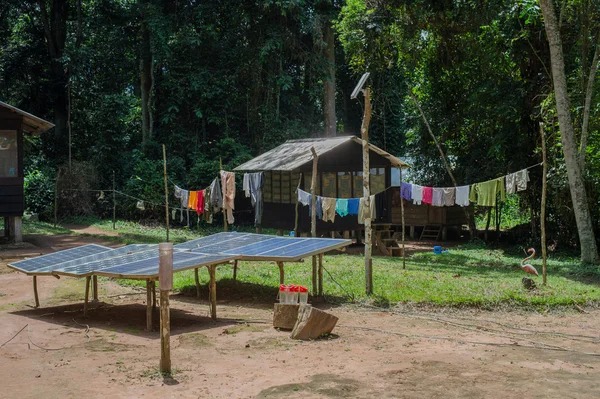
Decentralized energy changes the equation. By generating power close to where it is consumed, it reduces losses, lowers costs, and allows local actors to participate in energy management. Solar panels on rooftops, small wind turbines, biomass digesters, and micro-hydro systems provide scalable solutions that can be adapted to community size, geography, and economic capacity.

For rural families, a solar home system can power lights, mobile phones, and small appliances, dramatically improving quality of life. For schools and health clinics, it ensures uninterrupted access to refrigeration, lighting, and communications. For small businesses, it enables machinery, cold storage, and productive uses that generate income.

Success Stories Across the Continent

Several African countries illustrate the transformative potential of decentralized energy:

  • Kenya: M-KOPA, a pay-as-you-go solar company, has connected over 1 million homes to solar energy. Its model combines technology with flexible financing, allowing families to pay in small installments through mobile money. Beyond lighting, households gain access to phone charging, small appliances, and clean cooking solutions.

  • Nigeria: The rural electrification agency has partnered with private mini-grid developers to supply villages with solar power. Communities previously dependent on diesel generators now enjoy cleaner, more affordable energy. Local entrepreneurs manage these mini-grids, creating jobs while maintaining the systems.

  • Senegal: Solar mini-grids in remote villages provide reliable energy for irrigation pumps, cold storage for fish and agricultural produce, and street lighting that improves security and business hours. This decentralized approach fosters economic activity rather than simply delivering light.

  • South Africa: Companies like SolarTurtle deploy portable, containerized solar units in informal settlements. Residents pay small fees for access, replacing kerosene lamps with clean, safe electricity.

These examples demonstrate that decentralized energy is not a marginal solution. It is a pragmatic and scalable model capable of driving inclusive growth.

Economic and Social Impacts

Decentralized energy generates benefits that extend far beyond electricity access:

  • Job Creation: Installation, maintenance, financing, and sales generate direct employment. Entrepreneurs emerge to run mini-grids, offer technical services, or develop innovative energy products.

  • Income Growth: Reliable electricity allows small businesses to operate machinery, refrigerate goods, and offer services previously impossible. Farmers can process crops, fishermen can preserve fish, and artisans can expand production.

  • Health and Education: Clinics can power refrigerators for vaccines, water pumps, and diagnostic equipment. Schools can extend learning hours with lighting, charge devices for digital learning, and reduce reliance on costly diesel generators.

  • Environmental Benefits: Replacing kerosene lamps, diesel generators, and charcoal stoves with solar or wind systems reduces carbon emissions and indoor air pollution, directly improving public health and contributing to climate mitigation goals.

The Role of Policy and Regulation

Decentralized energy thrives where policy and regulation support innovation. Governments have multiple levers to enable this transition:

  1. Clear Licensing and Permitting: Simplifying approvals for mini-grids and renewable installations reduces barriers to entry and encourages private investment.

  2. Tariff Structures: Establishing fair, predictable tariffs ensures financial sustainability for developers while protecting consumers.

  3. Incentives and Subsidies: Tax exemptions, concessional financing, and grants can accelerate adoption, especially in underserved areas.

  4. Standards and Quality Assurance: Certification of solar panels, batteries, and installation practices builds consumer confidence and reduces safety risks.

  5. Integration with Central Grid: Planning for eventual interconnection ensures mini-grids can evolve as national grids expand, avoiding stranded assets and maximizing efficiency.

Several countries, including Kenya, Rwanda, and Nigeria, have begun implementing these policies. The challenge remains in scaling frameworks, ensuring transparency, and balancing commercial incentives with public service goals.

Financing Decentralized Energy

Capital is critical. Traditional lenders often view decentralized energy as high risk due to small-ticket investments and dispersed clientele. Innovative financing models have emerged to bridge this gap:

  • Pay-As-You-Go (PAYG): Customers pay small installments via mobile money, lowering upfront costs and ensuring predictable revenue streams for developers.

  • Blended Finance: Combining concessional funding, development finance, and private investment reduces risk for investors while increasing capital availability.

  • Impact Investment: Socially minded investors focus on both financial returns and measurable social benefits, including energy access, emissions reductions, and economic empowerment.

  • Community Ownership Models: Cooperatives or community trusts invest in local mini-grids, retaining profits locally and building resilience.

Financing is no longer an insurmountable barrier. With the right combination of innovation, technology, and policy, decentralized energy becomes a bankable and transformative sector.

Skills, Careers, and Entrepreneurship

The rise of decentralized energy creates an ecosystem of careers and entrepreneurial opportunities. Technicians, engineers, project managers, sales agents, finance specialists, and software developers all play a role. Beyond formal employment, local entrepreneurs can build energy kiosks, manage maintenance networks, and offer value-added services such as solar-powered refrigeration, phone charging, or small-scale processing.

Training programs, such as those offered by GreenReady Academy, become critical in preparing the workforce. Practical skills in solar installation, battery management, mini-grid operations, and energy management are in high demand. This is not just about jobs; it is about building a generation of professionals capable of leading Africa’s energy transformation.

Challenges and the Path Forward

Despite progress, challenges remain:

  • Technical Capacity: Skilled technicians are scarce, and training programs are limited. Scaling requires investments in education and certification programs.

  • Affordability: Even with PAYG models, the poorest households may struggle to pay. Cross-subsidies or targeted support may be necessary.

  • Supply Chain Limitations: Batteries, solar panels, and smart meters require reliable supply chains. Local manufacturing can reduce costs and dependency.

  • Maintenance and Sustainability: Systems must be maintained over decades, not just installed once. This requires durable technology and community engagement.

  • Integration with Development Planning: Energy alone is not enough. Successful projects integrate power with education, health, agriculture, and enterprise development.

Addressing these challenges is essential to ensure that decentralized energy reaches its full potential as a tool for economic transformation.

Lighting the Future

Decentralized energy is more than technology. It is a pathway to self-reliance, equity, and development. It empowers communities to take control of their energy needs, opens doors to entrepreneurship, supports schools and clinics, and mitigates environmental impacts.

Africa has the opportunity to lead the world in decentralized energy deployment. By combining local knowledge, innovative financing, supportive policies, and skilled professionals, the continent can demonstrate that energy access is not just about infrastructure but about building resilient, thriving societies.

Every solar panel installed on a rooftop, every mini-grid powering a village, every battery replacing a diesel generator is a step toward a future where energy is reliable, clean, and inclusive. This is a future Africa can not only reach but shape, defining the next chapter of global energy innovation.

Climate Change Impact in Nigeria: Loss and Damage, Vulnerable Communities and Supports Available

0

As promised in our inaugural chronicle. We will continue to drill down on the Climate Change as an existential threat so our people will understand the impacts of actions and inactions as well as the opportunities it offers.
Climate Change Impact:
Climate change is having a devastating impact on Nigeria, with far-reaching consequences on the environment, economy, and human populations. Some of the key climate change impacts in Nigeria include:

  • Rising temperatures: Nigeria is experiencing rising temperatures, with an increase of 1.5°C to 3.2°C projected by 2100.
  • Changing precipitation patterns: Climate change is altering precipitation patterns in Nigeria, leading to more frequent and severe droughts and floods.
  • Sea-level rise: Nigeria’s coastal communities are vulnerable to sea-level rise, with projections indicating a rise of up to 1 meter by 2100.

Vulnerable Communities:

The following communities in Nigeria are particularly vulnerable to climate change:

  • Coastal communities: Communities along Nigeria’s coast, such as those in Lagos, Port Harcourt, and Calabar, are vulnerable to sea-level rise, flooding, and erosion.
  • Agricultural communities: Communities that depend on agriculture, such as those in the Niger Delta and the Sahel region, are vulnerable to changing precipitation patterns, droughts, and floods.
  • Pastoralist communities: Pastoralist communities, such as those in the Sahel region, are vulnerable to changing precipitation patterns, droughts, and heat stress.

Loss and Damage:

Climate change is resulting in significant loss and damage in Nigeria, including:

  • Economic losses: Climate-related disasters, such as floods and droughts, are resulting in significant economic losses, including damage to infrastructure, agriculture, and livelihoods.
  • Human migration: Climate change is contributing to human migration in Nigeria, as people are forced to leave their homes and communities due to changing environmental conditions.
  • Health impacts: Climate change is having significant health impacts in Nigeria, including increased incidence of heat stress, malaria, and other climate-sensitive diseases.

Supports Available:

The Loss and Damage Fund provides financial support to countries to address the impacts of climate change. Some of the supports available include:

  • Rehabilitation and recovery efforts: Financial support for rehabilitation and recovery efforts, including the reconstruction of homes, businesses, and infrastructure.
  • Climate resilience and adaptation measures: Financial support for climate resilience and adaptation measures, including the development of early warning systems, flood-resistant infrastructure, and climate-resilient agriculture.

Case Study: 2012 Floods in Nigeria

In 2012, Nigeria experienced severe flooding that affected over 30 states and resulted in:

  • Estimated economic losses of over ₦2.5 trillion (approximately $6.7 billion USD)
  • Over 360 deaths
  • Displacement of over 2 million people

The floods were caused by a combination of heavy rainfall, dam releases, and inadequate drainage infrastructure. The Loss and Damage Fund can provide financial support to Nigeria to address the impacts of climate-related disasters, such as the 2012 floods.

Africa’s Food Future: Climate, Agriculture, and the Struggle for Resilience

When Africa’s farmers look to the sky, they are not just checking for rain. They are checking for their future. Across the continent, agriculture remains the backbone of daily life, employing over half the labor force and feeding more than a billion people. Yet the stability of this backbone is cracking under the weight of climate disruption, population pressure, and economic dependency. Africa’s food future sits at the intersection of enormous promise and profound vulnerability. The question is whether this century will be remembered as the moment Africa fed the world – or as the era when food insecurity deepened despite the continent’s vast natural wealth.

The paradox of plenty

Africa holds nearly 60 percent of the world’s uncultivated arable land. From the savannas of Nigeria to the Rift Valley of Kenya and the fertile highlands of Ethiopia, the continent has soils and climates capable of producing a dazzling variety of crops. In theory, Africa could become a breadbasket for itself and beyond. In practice, the continent imports more than $40 billion worth of food each year, a figure expected to soar if trends continue.

This paradox is rooted in structural weaknesses. Many African farms are smallholder plots, averaging less than two hectares. Productivity lags behind global standards, often due to poor access to irrigation, quality seeds, fertilizers, and extension services. Roads and storage infrastructure remain inadequate, leading to post-harvest losses of up to 30–40 percent in some regions. While global agribusinesses scale production with precision agriculture and advanced logistics, millions of African farmers still depend on unpredictable rainfall and traditional tools.

Climate as a multiplier of risk

Climate change does not create Africa’s agricultural challenges; it amplifies them. Rising temperatures, shifting rainfall patterns, and more frequent droughts and floods are cutting into yields and destabilizing planting cycles. For maize farmers in southern Africa, a late start to the rainy season can erase an entire harvest. In the Sahel, desertification is pushing pastoralists into conflict with farmers over shrinking grazing lands. In East Africa, once-predictable rainy seasons have turned erratic, making traditional weather knowledge unreliable.

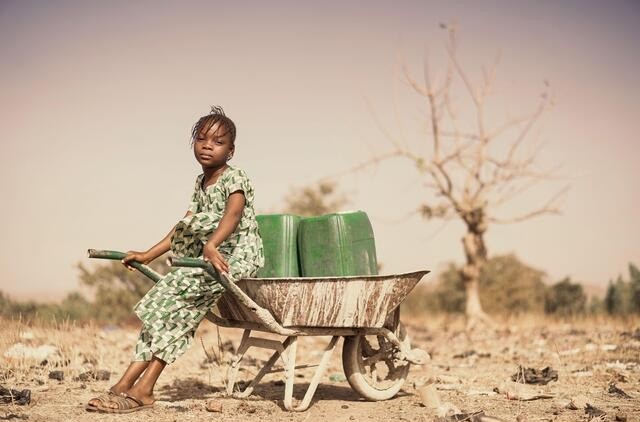
Water stress is becoming a defining feature of the crisis. The Nile, Niger, and Zambezi river basins support hundreds of millions of people, yet upstream development, population growth, and climate pressures are straining these lifelines. Irrigation covers less than 6 percent of cultivated land in Africa, compared to more than 30 percent in Asia, leaving farmers dangerously exposed to rainfall variability.

Soil fertility is another silent emergency. Years of overuse without replenishment, combined with erosion and nutrient depletion, have left large tracts of farmland degraded. Fertilizer use in Africa remains far below global averages, but the continent also risks overdependence on imported chemical inputs whose prices swing with global markets, as seen during the Ukraine war when fertilizer costs spiked sharply.

The new frontiers of farming

Despite these daunting challenges, Africa is not standing still. Across the continent, new approaches are taking root, many of them blending indigenous knowledge with modern innovation.

  • Regenerative agriculture is gaining momentum. Techniques such as crop rotation, cover cropping, and minimal tillage are being promoted to restore soil health, increase biodiversity, and sequester carbon. In parts of Kenya and Ghana, farmer cooperatives are adopting agroecological methods that reduce dependency on external inputs while improving yields over time.

  • Agroforestry—the integration of trees and crops—is reemerging as a climate-smart practice. Trees like moringa, shea, and bamboo not only provide shade and windbreaks but also improve soil fertility and generate additional income streams. Bamboo, in particular, is being positioned as both a climate solution and an economic driver, with potential for food, construction, and bioenergy applications.

  • Digital farming is quietly reshaping how farmers access information. Mobile platforms now deliver localized weather forecasts, market prices, and extension advice via SMS or WhatsApp. In Nigeria, platforms like Farmcrowdy have experimented with crowd-investment models that connect urban financiers with rural farmers. In East Africa, services such as M-Farm help farmers bypass middlemen by linking directly to buyers.

  • Seed sovereignty is becoming a rallying cry. While global seed companies dominate commercial supply chains, local initiatives are conserving and distributing indigenous varieties that are often more resilient to pests and climate extremes. These efforts are critical for maintaining biodiversity and farmer autonomy.

The geopolitics of food

Agriculture in Africa is not just about farmers and fields; it is also about power and dependency. Many African countries rely heavily on imported wheat, rice, and cooking oil, making them vulnerable to global shocks. The Russia–Ukraine war exposed this fragility when wheat imports were disrupted, sending bread prices soaring in countries like Egypt and Sudan.

Foreign agribusinesses and aid agencies often promote input-intensive farming models that lock farmers into cycles of dependency on imported seeds, fertilizers, and pesticides. While such models can temporarily boost yields, they may undermine long-term resilience and sovereignty. Critics argue that this approach mirrors earlier colonial patterns, where Africa exported raw resources while remaining dependent on external systems for survival.

The African Continental Free Trade Area (AfCFTA) offers a chance to rewire this dynamic by boosting intra-African food trade. Currently, many African countries import food from outside the continent even when surplus production exists nearby. Better regional logistics and harmonized trade rules could cut costs, reduce losses, and strengthen resilience against global shocks.

Smallholders at the center

If Africa is to feed itself, smallholder farmers must be at the heart of the transformation. They are not just producers but custodians of landscapes, traditions, and local knowledge. Supporting them requires more than handouts of seeds or fertilizers. It demands structural investment in rural roads, storage facilities, irrigation systems, and local processing industries.

Finance remains a critical bottleneck. Many farmers lack access to affordable credit, leaving them unable to invest in productivity-enhancing technologies. Climate finance mechanisms, micro-insurance schemes, and blended public-private models could close this gap, but they must be designed to reach the rural majority rather than a privileged few.

Women, who make up a large share of Africa’s agricultural workforce, are often excluded from land ownership and credit access. Empowering them with secure land rights and financial tools would have outsized impacts on productivity and household nutrition.

Toward a resilient food future

Africa’s food future is not predetermined. It will be shaped by choices made in policy, investment, and culture. Three priorities stand out.

  1. Invest in resilience, not just yields. It is tempting to measure success only in tons of maize or rice harvested. But true resilience means soils that regenerate, water systems that endure, and communities that adapt. Policymakers should value sustainability alongside productivity.

  2. Empower local systems. From seed banks to farmer cooperatives, local institutions are best placed to embed resilience. Supporting them with finance, technology, and policy space will build food systems that last.

  3. Connect food to dignity. Hunger in Africa is not simply a technical failure; it is also a moral one. A continent with such natural abundance should not struggle to feed itself. Linking food security to dignity means recognizing farmers as professionals, not as passive recipients of aid, and designing policies that respect their autonomy.

A crossroads moment

Africa’s food future lies in balance. On one side is a path of deepening dependency, where climate shocks and global market volatility trap millions in cycles of hunger. On the other is a path of resilience, where innovation, tradition, and sovereignty combine to create food systems that are abundant, fair, and sustainable.

The stakes are enormous. By 2050, Africa’s population is projected to double to nearly 2.5 billion people. Feeding them will require not only more food but smarter, fairer, and more resilient systems. Whether Africa becomes a global breadbasket or a humanitarian hotspot will depend on decisions taken today – in parliaments, in villages, and in the fields where farmers still look anxiously to the sky.

Image Credit: UNDP

The Rise of Green Careers: Why the Future of Work is Also the Future of the Planet

0

When people hear “green jobs,” they often imagine tree planting or recycling. But in truth, the green economy is quietly reshaping every profession – from finance to farming, engineering to entertainment. It is not a side niche. It is the next industrial revolution.

And unlike previous revolutions that extracted, burned, and polluted their way to prosperity, this one is powered by necessity: a planetary need to survive and thrive within ecological limits.

What Exactly Are Green Careers?

At its core, a green career is any line of work that reduces environmental harm while creating social and economic value. That definition is deceptively simple. In practice, it cuts across every sector:

  • Energy → Solar engineers, wind farm technicians, CNG fleet managers.
  • Agriculture → Regenerative farmers, agroforestry experts, bamboo value chain developers.
  • Finance → Climate risk analysts, green bond managers, ESG auditors.
  • Construction → Sustainable architects, low-carbon materials specialists, housing retrofitting experts.
  • Tech & Data → Climate modelers, AI-driven resource optimizers, carbon market platforms.
  • Creative Economy → Sustainability communicators, eco-fashion designers, climate storytellers.

Green roles are not just “employment.” They are better employment — combining meaningful work with competitive compensation, resilience, and growth prospects.

Why Green Careers Matter More Than Ever

1. The Numbers Don’t Lie

According to the International Labour Organization (ILO), the global shift to a green economy could create 11 million new jobs by 2030 if managed well. Meanwhile, the World Economic Forum projects that up to 395 million jobs worldwide may be disrupted by automation and climate shocks in the same timeframe.

In Nigeria and Africa, the story is sharper: climate change already threatens livelihoods in agriculture, fisheries, and informal trade. But this same disruption is driving demand for new roles – solar installers, waste-to-energy entrepreneurs, sustainability consultants, and carbon accountants.

2. Beyond Survival: Growth Potential

Unlike “stopgap” employment, green careers are future-proof. They track the biggest flows of global capital today:

  • Renewables attracted $1.3 trillion in global investment in 2023, more than fossil fuels.
  • Carbon markets and climate finance are unlocking new professions in Africa.
  • ESG (Environmental, Social, Governance) compliance has become mandatory for multinationals – creating demand for specialists who can guide African firms into global supply chains.

3. The Meaningful Work Factor

Surveys repeatedly show that young professionals want purpose, not just paychecks. Green careers deliver both. They anchor individuals in work that feels urgent, necessary, and rewarding – solving problems that matter for families, communities, and generations unborn.

Where the Skills Gap Lies

Here’s the challenge: the demand curve for green talent is rising steeply, but the supply curve is flat. Universities across Africa still train more oil engineers than renewable energy engineers. Business schools teach “profit maximization” but barely touch circular economy models.

As a result:

  • Many job seekers can’t access green opportunities because skills mismatch is real.
  • Companies struggle to hire locally and rely on costly expatriates.
  • Governments risk missing global climate funds because qualified local expertise is scarce.

This is where training, upskilling, and retooling become not optional, but urgent. Initiatives like GreenReady Academy, online certifications, and apprenticeship models are beginning to close the gap — but scale is still a frontier to conquer.

Why Green Careers Are Better Careers

Let’s strip this down. Green roles offer four things traditional roles increasingly don’t:

  • Security → As fossil industries decline and climate shocks intensify, “brown” jobs are exposed. Green roles are linked to resilience and global policy mandates.
  • Mobility → Green skills are transferable across borders. A solar technician in Lagos can work in Nairobi, Dubai, or Berlin.
  • Income Growth → Scarcity of qualified talent means premium pay. Early entrants often enjoy first-mover advantage.
  • Impact → The rare combination of earning a living while solving civilization-scale problems.

It is no exaggeration: the future of meaningful employment is green.

Africa’s Advantage – If Seized

Africa has the world’s youngest workforce and some of the planet’s richest renewable resources. That is both a risk and an opportunity. If governments, businesses, and citizens act with urgency, Africa could leapfrog into being not just a consumer of green technologies, but a producer, innovator, and exporter of green talent.

The alternative? Being left behind as another wave of global transformation passes by.

Get Involved

For individuals: Don’t wait. Start building green skills now – from short online courses to hands-on apprenticeships.
For businesses: Invest in workforce retraining. Hire for potential and upskill aggressively.
For governments: Integrate green skills into national curricula. Link climate commitments with workforce development.
For platforms like Greenskillhub: Connect the dots. Bridge opportunity and preparation, so that talent and demand actually meet.

The Bottom Line

The green transition is not just an environmental agenda. It is an employment agenda, an economic agenda, and a human survival agenda.

Every career will eventually be a green career – the only question is who prepares early and who is left scrambling.

And for those who choose this path? They will discover that green jobs are not just jobs.
They are better jobs, building a better world.

Africa’s Climate Finance Deficit: What the Numbers Conceal

Africa is drowning in statistics that contradict each other. On one page you will read that the continent needs roughly three hundred billion dollars a year to meet its climate commitments. On another you will find that the money flowing in is a tiny fraction of that number, and that most of what arrives is shaped by constraints, not by African plans. Those two, simple facts tell a deeper story: the shortfall is not only a financing problem. It is a political problem, a market design problem, and a development problem rolled into one. And unless we understand what the numbers hide, every attempt to plug the gap will be cosmetic.

Here are the headline figures. Analyses of African Nationally Determined Contributions and other national plans converge on the order of magnitude of Africa’s need: about $2.7–2.8 trillion between 2020 and 2030, or roughly $277 billion per year to meet current targets. At the same time, measured climate finance flows to Africa were only in the low tens of billions in recent years. Early CPI estimates put flows in 2020 at about $30 billion; the most recent landscape work finds that flows rose, but remain far short of requirements, roughly $44 billion in 2021/2022 for the whole continent. Those numbers are not small errors in calculation. They mean that, even with recent growth, Africa is receiving a little more than one tenth of what it needs.

If the gap were only arithmetic we could design a financing campaign and move on. It is far more complicated. The shortfall has shape and texture. What the headline hides is this: most capital is concentrated in a few countries, much of it targets mitigation rather than adaptation, private capital is scarce, and instruments that reach Africa are often loan-based and short on concessionality. Those facts have consequences for sovereignty, debt sustainability, and who benefits from climate action.

Why the numbers diverge so badly

Three forces combine to make the finance gap stubborn. First, most climate capital is not flowing to African priorities. Global investment in energy transition technologies has grown rapidly, reaching roughly $1.3 trillion in 2022 across renewables, electrified transport, storage, hydrogen, and efficiency. That headline number sounds encouraging until you look at the geography. Africa accounts for a tiny slice of that global investment. Much of the capital, and the business models that attract it, favor large projects, stable regulatory regimes, and creditworthy counterparties. Those conditions are still rare across much of the continent.

Second, the balance between mitigation and adaptation funding is deeply skewed. Adaptation, which pays for flood defenses, resilient agriculture, water systems, and public-health preparedness, typically delivers lower direct financial returns. Private capital therefore avoids those projects unless public banks, guarantees, or blended finance structures change the risk-reward calculus. The result is that adaptation needs are underfunded even though adaptation is often the urgent, locally felt priority. In 2021–2022, Africa captured only a small share of global adaptation finance, a pattern that undercuts resilience across the continent.

Third, the architecture of climate finance is not designed for small, distributed projects. Investors chasing scale prefer one large wind farm or solar park to hundreds of village microgrids. That preference leaves a twofold problem: worthwhile small projects go unfunded, and countries with a mosaic of small needs must assemble vast numbers of bankable projects before a single investor will take them seriously. That assembly process requires technical capacity and time, and it is a costly precondition many African governments cannot meet at scale. CPI and related analyses identify ticket size, perceived risk, and weak local capital markets as central barriers to private mobilization. CPI+1

A note on the $100 billion pledge

Another recurrent headline concerns the $100 billion per year pledge. That commitment, first articulated in Copenhagen and later formalized in Paris, has been an enduring political touchstone. Tracking exercises show the pledge was met only after delays and at levels that raise questions about composition, grants versus loans, and additionality. In other words, even when the formal number is reached it does not mean that funds are flowing in forms or amounts that align with African priorities, or that they are reducing costs for those least able to bear them. The existence of a headline commitment, important though it is, has not solved Africa’s finance problem.

Where the money actually goes

Two patterns are stark. First, climate finance is concentrated. A handful of countries, project types, and institutions receive the lion’s share of inflows. Green bond markets, for example, have generated finance but most issuance is in South Africa, Egypt, Morocco, Nigeria, and a handful of others. That concentration means most African governments and communities have little direct access to international capital markets on favourable terms. It also concentrates influence over project design.

Second, public finance dominates the landscape. The public sector remains the primary source of concessional capital, and public institutions take on risks private markets will not accept. That is not by accident. Development banks, bilateral funds, and multilateral lenders use grants and concessional loans to reduce initial risks and attract private partners. But public finance is limited, and the demand is far greater than budgets allow. The policy choice therefore becomes how to use scarce concessional funds to catalyze larger private flows. The wrong choice is to transfer all risk to fragile governments through market-rate debt; the right choice is to absorb early-stage risk while building pipelines that private finance can follow.

What this means for adaptation and for people

Adaptation must be judged by a different calculus than mitigation. Flood walls, irrigation, climate-proof schools and clinics do not sell electricity into a grid. They save lives and incomes, and they protect the assets that towns and cities need to function. Yet adaptation projects rarely produce the credit enhancements that make them attractive to private lenders. As a result, vulnerable communities lose out. When adaptation dollars are small, projects are left to donors and domestic budgets, which are themselves strained by debt repayments and competing development needs. The upshot is simple and tragic: the poorest and most climate-exposed people are left with the smallest share of global climate money.

Why private capital has not filled the gap

Several interlocking reasons explain private capital’s reluctance.

• Perceived and actual risk. Political instability, currency volatility, and uncertain regulatory environments make returns unpredictable. Even where projects are well designed, investors fear expropriation, payment default, or sudden policy shifts. Multilaterals and guarantee instruments can help, but they cannot eliminate all risk.

• Bankability and pipeline problems. Too many projects are not yet structured in ways banks accept. Developers lack the legal, technical, and financial packaging needed to attract large institutional capital. Building that pipeline takes time and technical assistance.

• Ticket-size mismatch. Institutional investors want tickets they can underwrite at scale. Hundreds of small, high-impact rural projects do not match that appetite unless they are bundled, and bundling costs money.

• Debt sustainability concerns. Many African governments are already servicing high debt burdens, which limits their ability to borrow on commercial terms even for priority climate investments. At the same time, loans are often the default instrument, which risks swapping one problem for another.

These are not abstractions. They translate into projects that never leave design, or that deliver only partial benefits because the right mix of grant and loan financing was not available.

New frontiers that can change the shape of finance

Despite the obstacles, there are practical levers that shift the outcome from scarcity to scalability.

Blended finance and guarantees. If limited concessional funding is used judiciously, it can reduce construction risk, lengthen tenors, and unlock private capital. Guarantees and first-loss structures remain underused across African markets. Targeted guarantees can make a renewable project bankable without the sovereign taking all the risk. CPI and African development practitioners have documented strong potential for strategic blended instruments when they are applied to well-prepared pipelines.

Carbon and nature-based markets. Properly regulated carbon markets, combined with high-integrity biodiversity and nature credit systems, can channel new revenue to forest protection, mangrove restoration, and agroforestry. Those revenues can fund livelihoods and adaptation activities if they are structured to reward local stewards and avoid perverse outcomes. Carbon markets are no silver bullet, but they are a necessary part of the solution mix, especially for countries with vast natural sinks.

Domestic capital mobilisation. African pension funds, insurers, and local banks hold the most realistic potential for scale over the long run. Mobilising them requires stronger local currency instruments, improved regulatory frameworks, and demonstrable, low-friction investment channels. Nigeria, Kenya, and South Africa offer nascent examples of how sovereign and corporate green instruments can begin to attract domestic institutional capital. But the market remains shallow, and most national pension pools are not yet oriented to take climate risk-adjusted positions.

Project aggregation and standardisation. Standardised project documentation, reusable contractual templates, and pooled structures reduce transaction costs. Development partners have started to test aggregation platforms that turn many small projects into one investable vehicle. This is a technical but critical fix. A village microgrid becomes attractive to a private investor when it is one of a hundred identical microgrids packaged into a single fund.

A short case study: Nigeria’s evolving finance architecture

Nigeria illustrates both the problem and the possibility. The government produced a national Energy Transition Plan in 2022 with clear sectoral roadmaps, recognizing the scale of finance required. The Federal Government has issued sovereign green bonds and put frameworks in place to direct proceeds toward energy, adaptation, and mitigation projects. Those actions have helped create a market narrative: Nigerian green instruments are now an option for both international and domestic investors. But the country also faces classic constraints: currency risk, high debt service ratios, and the need to convert plans into bankable pipelines. Nigeria’s experience shows how planning, market instruments, and domestic capital development must proceed in parallel.

What an effective strategy looks like

A coherent continental strategy has to be honest about trade-offs and sequenced in practical steps.

  1. Prioritise pipeline building. Governments and development partners must invest in the initial work that turns good ideas into bankable projects. That includes feasibility studies, contract standardisation, environmental assessments, and procurement readiness.

  2. Use concessional capital as a strategic lever. Grants and concessional loans should be deployed to de-risk early-stage investments, not to fund projects that private capital could easily finance. That targeted use will get more private money on the table faster.

  3. Mobilise domestic institutional capital. Reform pension regulation, create local green bond markets, and offer clear reporting standards. Domestic money can solve currency mismatch and reduce sovereign exposure.

  4. Align instruments to outcomes. For adaptation, donors and multilateral banks must design instruments that accept long-term, lower-return profiles but measure social and economic resilience. For mitigation, crowd in private capital with revenue-enhancing structures such as power purchase agreements, multi-year offtake contracts, and guarantees.

  5. Build stronger governance and transparency. Investors need predictable policy and clear regulatory signals. Countries that reduce political risk and strengthen contract enforcement will see capital arrive more reliably.

A final, uncomfortable truth

Financing is a tool. The deeper challenge is political economy. Who benefits from green projects? Who bears the cost? If climate finance replicates old patterns—benefit concentrated in capital cities, international companies extracting value—then public trust will erode. To close the gap effectively, Africa must insist on finance that supports local jobs, builds technical capacity, and strengthens public institutions.

The numbers tell us bluntly where we are. Africa needs hundreds of billions a year. Current flows are in the tens of billions. That arithmetic is a call to action, but it should not obscure the essential fact: finance alone will not do the job. What is required is better finance, organised around African priorities, blended and priced to fit the real economy, channelled through instruments that build rather than hollow out public capacity.

If the global community will not change the rules for Africa, then African governments and institutions must change the game. They must create investable opportunities at scale, mobilise domestic capital, and insist on partnerships that build local skills and ownership. That is the practical pathway from deficit to deployment. It will be complicated, but it is the only route that delivers resilience, growth, and dignity for the people those numbers represent.

Bamboo in Africa: The Green Gold for Jobs, Climate, and Industry

Across the African continent, a quiet revolution is taking root. It grows fast, thrives in diverse climates, and holds promise for communities, industries, and the planet alike. This is bamboo, often called “green gold” for its combination of economic potential, environmental benefits, and versatile applications.

For decades, bamboo has been overlooked in Africa. It was considered a wild grass, useful only for local fences or temporary shelters. Yet today, a deeper understanding of its properties reveals a resource that is stronger than many timbers, grows faster than most trees, and can regenerate degraded landscapes. From Ghana to Ethiopia, Nigeria to Rwanda, entrepreneurs, farmers, and climate practitioners are rediscovering bamboo as a multifaceted solution to economic development, environmental sustainability, and carbon sequestration.

The Science and Economics of Bamboo

Bamboo is not a tree; it is a grass, but one of extraordinary characteristics. Some species can grow over a meter per day under optimal conditions, reaching maturity in 3 to 5 years compared with decades for most hardwoods. Its tensile strength rivals steel, while its flexibility allows applications ranging from construction scaffolding to furniture, flooring, and artisanal crafts.

Economically, bamboo offers high-value opportunities along its value chain. Raw culms can be sold directly, processed into laminated boards, woven into mats and baskets, or transformed into fibers for textiles. Advanced processing enables bamboo-based composite panels, paper, and even bio-plastics. Its rapid growth and regenerative capacity reduce reliance on slow-growing timber, making it both profitable and sustainable.

In Africa, bamboo is underexploited. While Asia has developed billion-dollar industries around bamboo, African markets remain largely informal. Cultivating bamboo at scale could transform rural livelihoods, provide affordable building materials, and supply emerging industries in green construction and bio-based products.

Bamboo as a Nature-Based Climate Solution

Bamboo’s value is not only economic. It is a powerful tool for climate mitigation and ecosystem restoration.

  • Carbon Sequestration: Bamboo absorbs carbon dioxide rapidly during growth, storing it in culms and roots. Studies indicate bamboo plantations can sequester 5 to 12 tons of CO₂ per hectare per year, making it a viable contributor to national climate targets.
  • Soil Restoration: Bamboo’s dense root systems stabilize soil, prevent erosion, and improve water retention. In degraded lands, it accelerates rehabilitation while offering a sustainable income stream.
  • Agroforestry Integration: Bamboo can be intercropped with food crops, offering shade, wind protection, and diversified revenue without displacing farmland.

These attributes make bamboo a cornerstone of nature-based solutions (NbS), which are increasingly prioritized in climate finance and green development programs. For Africa, where land degradation and desertification threaten livelihoods, bamboo plantations offer a solution that is both ecologically restorative and economically productive.

Industrial and Entrepreneurial Potential

Africa’s bamboo sector is poised to generate jobs and entrepreneurial opportunities across multiple industries.

  1. Construction and Housing: Bamboo’s strength and flexibility make it ideal for low-cost housing, bridges, scaffolding, and flooring. Innovations in bamboo-laminated boards and engineered panels allow it to meet formal building standards. Startups in Kenya, Rwanda, and South Africa are already experimenting with bamboo houses that are resilient, sustainable, and affordable.

  2. Furniture and Crafts: Bamboo furniture offers aesthetic appeal and durability. Artisans can create local and export products, building brands around eco-conscious, African-made designs. Small-scale workshops are proliferating, offering a pathway for youth employment in both rural and urban areas.

  3. Energy and Biochar: Bamboo can be converted into charcoal or biochar, a carbon-rich soil amendment that also improves fertility. Biochar production integrates climate mitigation with sustainable agriculture, creating a circular model where energy and soil restoration coexist.

  4. Textiles and Paper: Bamboo fibers are increasingly used in fabrics and paper production. With appropriate processing technology, Africa could reduce imports of raw fibers, stimulate domestic manufacturing, and provide income opportunities along the processing chain.

  5. Carbon Markets: Bamboo plantations can be monetized through carbon credits. Projects that demonstrate verifiable sequestration and social co-benefits can attract climate finance, providing long-term revenue streams for communities and entrepreneurs.

Case Studies Across Africa

Several African countries offer proof that bamboo can scale effectively.

  • Ethiopia has promoted bamboo plantations for years. Its Bamboo Development Strategy integrates industrial use, rural livelihoods, and ecosystem restoration. Smallholder farmers earn income by selling poles to local industries while restoring degraded hillsides.

  • Nigeria has clusters of bamboo entrepreneurs in southern states. Bamboo is processed into furniture, handicrafts, and laminated boards for local markets. Partnerships with universities are supporting innovation in bamboo composites and engineered products.

  • Rwanda is exploring bamboo for housing and eco-tourism infrastructure. The government is promoting bamboo cultivation as a climate-smart alternative to timber, combining environmental policy with economic incentives.

  • Ghana has seen growth in bamboo handicrafts and furniture exports, particularly leveraging diaspora networks and fair trade platforms to access international markets.

These case studies demonstrate that the value is not only in the raw resource but in the knowledge, technology, and business models applied.

Skills and Workforce Development

For bamboo to reach its potential, Africa needs skilled professionals across the value chain:

  • Agroforestry Specialists: Understanding species selection, planting techniques, and sustainable harvesting.
  • Processing Technicians: Operating machinery for laminated boards, fibers, and composite products.
  • Designers and Artisans: Translating bamboo into furniture, crafts, and architecture.
  • Entrepreneurs and Managers: Running cooperatives, small businesses, and value-chain operations.
  • Climate Finance Experts: Developing projects eligible for carbon credits and accessing green funding.

Training programs, such as GreenReady Academy modules on sustainable materials and nature-based solutions, can equip youth and professionals with these competencies. Integrating practical, field-based learning ensures graduates are ready to participate in emerging bamboo industries.

Challenges and Opportunities

Despite its promise, bamboo faces obstacles:

  • Limited Awareness: Policymakers, financiers, and communities often undervalue bamboo, seeing it as a low-grade grass rather than a high-value resource.
  • Processing Technology Gaps: Industrial-scale processing requires machinery and know-how, which are scarce in many African countries.
  • Market Development: Domestic and international demand is fragmented. Developing supply chains, branding, and export channels is essential.
  • Land Tenure and Policy: Clear land rights, incentives, and integration with national forestry policies are required to scale plantations responsibly.

Addressing these challenges requires coordinated action across government, private sector, academia, and civil society. Public-private partnerships, investment in technology transfer, and market development can unlock the full potential of Africa’s bamboo sector.

Africa’s Green Gold

Bamboo represents a unique convergence of environmental sustainability, economic opportunity, and climate action. It is a resource that grows fast, restores degraded land, supports livelihoods, and can be transformed into high-value industrial products.

For Africa, investing in bamboo is an investment in jobs, entrepreneurship, and resilient communities. It is also an investment in nature-based solutions that contribute to global climate mitigation efforts. The potential is enormous, but realizing it requires vision, strategy, and action.

From smallholder farmers planting their first bamboo culms to startups manufacturing laminated boards for export, Africa’s green gold is waiting. With the right combination of skills, finance, policy, and innovation, bamboo can become a cornerstone of the continent’s sustainable development, delivering economic, social, and environmental dividends for decades to come.